MyCard - Contactless Payment
- 4.0
- Rating
- 10.00K
- Installs
- $17.99
- Price
 Analysis by App-foxy
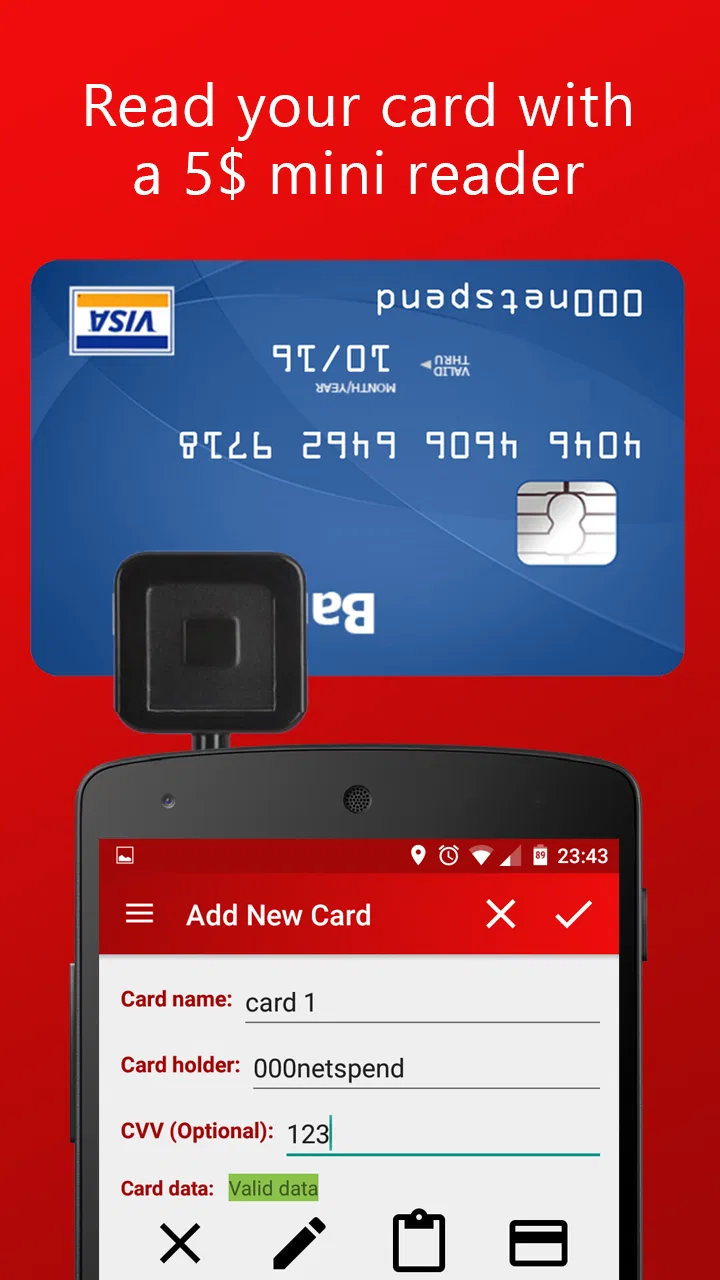
My first impression of MyCard - Contactless Payment was that it tries to solve a very specific annoyance: carrying one more physical card when a phone could handle the same tap. It is a finance app from Road Dogs, built around using a phone as a contactless bank card. That focus makes the first few days easy to understand. You are not learning a budgeting system, opening an investment account, or managing a complicated wallet. You are testing whether this app can become a practical part of your everyday payment routine.
The appeal is strongest when a contactless payment is already the fastest option. I can imagine leaving home with my phone and knowing that a quick tap at a compatible terminal is the intended experience. The idea is simple enough for someone who dislikes carrying a wallet, and the Everyone age rating reflects how broadly approachable the app is. At the same time, the purchase price of $17.99 changes the question. This is not merely a free utility that costs nothing to try; it has to earn a permanent place in your routine.
What the first week feels like
The first week is naturally about curiosity and convenience. I would begin by checking whether my phone, bank card, and the payment terminals I regularly use all cooperate with the app. That is more important than the promise of contactless payment itself. A payment tool is only useful when it works at the places where I actually shop, and a phone-based card should be treated as a practical experiment before becoming the only option in my pocket.
You May Also Like

 AccuWeather: Weather Radar
AccuWeather Review: A Quick, Clear Forecast for Everyday Decisions
For everyday plans, the best forecast is the one you can understand quickly. AccuWeather makes rain timing, radar, and local conditions easy to act on, with a few trade-offs.

 Hill Climb Racing
Why Hill Climb Racing Still Turns Crashes Into One More Run
A tiny car, a bumpy hill and one more upgrade: Hill Climb Racing keeps resurfacing because its simple chaos makes every near-miss feel personal.

 AliExpress - Shopping App
AliExpress Makes Global Shopping Feel Personal, but Shoppers Bear the Risk
AliExpress turns a global marketplace into a pocket-sized discovery engine. Its reach is useful, its shopping loop compelling, and its trade-offs easy to miss.

 Lords Mobile: Kingdom Wars
Lords Mobile Is a Kingdom-Building Routine, Not a Quick Match
A case-by-case verdict on the building, battles, device demands, and social commitments that make Lords Mobile rewarding for some players and exhausting for others.

 PDF Scanner app - TapScanner
TapScanner Makes Paperwork Easier to Capture, Check, and Share
TapScanner makes scanning with a phone feel less like a rescue operation and more like a dependable step in getting work done. Its capture tools are useful, though not flawless.

 Block Blast!
 Shows How Much a Puzzle Game Can Leave Out
A quiet grid game shows why puzzle players increasingly value instant clarity, repeatable skill and low-pressure play—and where the genre still needs to catch up.
More From Our News Desk
View All News


A realistic test would be a short grocery trip. I would keep the physical card available, use MyCard at the checkout, and then repeat the process at a café or another familiar retailer. This approach reveals more than a single successful tap. It shows whether the process feels natural when I am in a hurry, whether I remember the necessary steps without thinking, and whether the phone is ready at the moment payment is requested.
That last point is easy to underestimate. A physical bank card has one job and is usually already in hand. A phone is also used for messages, navigation, cameras, and many other tasks, so the payment habit has to fit into a device that is constantly changing context. My early recommendation would be to treat the first week as a compatibility and routine check rather than immediately abandoning a backup card.
The app’s short description, “MyCard,” is deliberately minimal, while its broader purpose is clearer: contactless payment through a mobile device. I appreciate that the concept does not appear overloaded with unrelated finance features. The trade-off is that the app’s value depends heavily on the payment experience itself. If you want spending analysis, financial planning, or a broad digital wallet, this narrow focus may feel limited rather than refreshing.
One useful habit is to test the app at different moments instead of judging it from a single transaction. Try it when the phone is already unlocked, then when it has been sitting in a pocket. Try it during a calm purchase and during a busy checkout. These situations expose the difference between a clever demonstration and a dependable daily tool. For me, a contactless payment app earns trust through repetition, not through the excitement of the first successful tap.
The current version is 1.21, and the minimum operating-system requirement is Android 5.0. That makes the app relevant to a wide range of Android phones, including devices that are not especially new. Still, software compatibility and payment compatibility are separate questions. A phone may meet the operating-system requirement while its hardware, card setup, or local payment environment creates a different experience. I would check those practical details before paying for the app.
The people who will notice the benefit quickly
MyCard makes the most sense for someone who already prefers tapping a card and wants to reduce what they carry. It may also suit a person who frequently leaves a wallet at home but almost always has a phone nearby. In that situation, the app is not trying to change spending behavior; it is trying to make an existing payment method more convenient.
It is less convincing for someone who rarely uses contactless terminals, keeps a phone in a bag during purchases, or depends on several cards and payment methods. The same is true for anyone who expects a finance app to organize bills, categorize expenses, or provide a detailed overview of money. MyCard should be judged as a focused payment tool, not as a replacement for every financial app on a phone.
Whether the convenience survives from month to month
The novelty of paying with a phone fades quickly, which is actually a good test. Once the initial curiosity disappears, the app needs to remove enough friction to become automatic. I would measure its lasting value by three questions: Do I reach for the phone naturally? Does the payment work consistently in my normal locations? Does using it save enough effort to justify the purchase?
For a person who already carries a phone everywhere, the answer can be yes. The advantage is not dramatic on every transaction, but small conveniences can become meaningful when repeated. A phone-based card can reduce the need to search for a wallet, especially during quick purchases or when carrying bags. The strongest use case is not a special trip; it is the ordinary moment when the phone is already in hand.
There is also a useful distinction between convenience and dependence. I would keep a physical payment option available until MyCard had proved itself over time. That is not a criticism unique to this app. Any phone-based payment method can be affected by a dead battery, a forgotten device, a damaged screen, or a situation where the phone is not easy to access. The sensible long-term routine is to use the app as a preferred option without pretending that every alternative has become unnecessary.
The app has attracted an average rating of 4.0 from around 286 ratings, with about 120 written reviews and over 10K installs. Those figures suggest that it has found a real audience, but they do not remove the need for personal testing. Payment experiences are unusually dependent on hardware, banks, terminals, and habits. A rating can tell me that other people have found value, yet it cannot guarantee that my own daily route will feel equally smooth.
One non-obvious trade-off is the difference between reducing wallet clutter and increasing phone dependence. If I use MyCard for nearly every purchase, I gain a lighter pocket but place more importance on keeping the phone charged and available. That may be worthwhile for a minimalist routine, but it is not automatically better for everyone. People who spend long periods outdoors, travel without reliable charging, or share payment responsibilities may prefer the resilience of a physical card.
Another practical insight is that the best long-term test is based on failed or awkward moments, not successful ones. A normal tap tells me the app works under ideal conditions. A slow checkout, a crowded counter, or a payment attempt while the phone is locked tells me whether the system is comfortable under pressure. I would pay attention to how quickly I can recover if a transaction does not go through, because recovery time affects whether I continue using a payment tool.
How it compares with ordinary alternatives
The obvious alternative is a physical bank card. A card is familiar, independent from a phone battery, and easy to hand to a cashier when needed. MyCard counters with the convenience of combining payment with an item I already carry. If avoiding a wallet matters more to me than having a separate backup, the app has a clear advantage. If reliability in unusual situations matters most, the physical card remains difficult to replace.
Another alternative is a broader mobile wallet or a payment feature already integrated into the phone. Those options may be more attractive for users who want several cards, loyalty passes, transaction organization, or a payment system tied closely to the device. MyCard’s narrower purpose can be a benefit if I want less clutter and a straightforward payment focus. It can also be a drawback if I am trying to consolidate many parts of my wallet in one place.
This is where the $17.99 cost deserves careful thought. A free or built-in alternative has an immediate advantage, even if its interface is less appealing. MyCard needs to feel sufficiently dependable and convenient to justify paying for a dedicated solution. I would not recommend buying it solely because contactless payment sounds modern. I would buy it only after deciding that this particular approach fits my phone, my card, and my regular shopping habits.
Maintenance is the real long-term test
Payment apps are not the kind of software I want to constantly manage. Once configured, the ideal experience is quiet: open the phone, complete the payment, and continue with the day. That makes maintenance a central part of the review. An app can be impressive during setup and still become tiring if I have to repeatedly troubleshoot it or rethink my routine.
My maintenance checklist would be simple. I would keep the phone’s operating system in a supported state, make sure the device remains in good working order, and avoid discarding the physical card until the app has earned trust. I would also review my payment routine after an update or a change of phone, because a contactless tool is more sensitive to device changes than a traditional card.
The minimum requirement of Android 5.0 is welcoming for older devices, but I would not interpret that as a promise that every old phone will deliver the same experience. Age affects battery health, performance, and the overall condition of the device. A phone that struggles with everyday tasks may not be the ideal foundation for something as time-sensitive as checkout payment, even when the operating system meets the stated requirement.
There is a maintenance burden that is easy to miss: remembering where the app fits in the payment process. If I use several payment tools, I can create hesitation at the terminal. A lasting setup should have one clear default, with MyCard either taking that role or remaining a deliberate secondary option. The more often I stop to decide which app or card to use, the less of the promised convenience remains.
I would also avoid judging the app only by how it looks. A polished interface is pleasant, but payment software succeeds through predictable behavior. The most valuable quality is confidence before tapping: I should know what I am about to do and what to expect afterward. If the experience requires too much attention for a tiny purchase, a physical card or an integrated wallet may be the better everyday choice.
Where fatigue can appear
The first source of fatigue is uncertainty. Contactless payment feels effortless when everything lines up, but any hesitation at the terminal changes the mood immediately. If I have to wonder whether the phone is ready, whether the card was recognized, or whether I should try again, the app begins to feel like an extra step rather than a shortcut.
The second is the phone itself. People often treat their phones as universal tools, but that also means they can be misplaced, muted, low on power, or buried under other tasks. A physical card does not compete for attention with notifications or a navigation screen. MyCard is most comfortable when I have already made the phone the center of my daily routine.
The third is cost fatigue. A one-time purchase can feel reasonable during the first week, when the novelty is high. After a month, I may compare it more honestly with the card I already own or with a payment function included elsewhere. The app has to provide recurring convenience, not just a memorable first impression. If I use it only occasionally, the price becomes harder to defend.
There is also the fatigue of carrying a backup. This sounds contradictory, but it matters. If I never trust the app enough to leave the physical card behind, I may not actually reduce what I carry. That does not make MyCard useless; it simply changes its role from replacement to convenience layer. I would be comfortable with that role if the app made frequent payments easier, but I would not describe it as a complete wallet substitute in my own routine.
For a careful trial, I would use it for ordinary low-pressure purchases first, then for places where I know contactless payment is already accepted. I would not make it my only payment method during travel or an important appointment until it had become familiar. This staged approach gives the app a fair chance while protecting me from turning an untested convenience into a source of stress.
My long-term verdict
After the novelty fades, MyCard remains interesting because its purpose is easy to understand and potentially useful every day. Road Dogs has positioned it in a focused part of finance: turning the phone into a contactless bank-card experience rather than trying to become an all-purpose money manager. That focus will appeal to people who want a lighter wallet and already feel comfortable paying by phone.
My recommendation is conditional but positive. If contactless payments are central to your routine, your phone is always with you, and you are willing to test the setup before relying on it, the app can earn lasting space. Its value comes from repeated small conveniences, not from a large collection of features. I would think of the purchase as paying for a particular habit, so the habit needs to be one I will actually maintain.
I would skip it if I rarely use contactless terminals, prefer the independence of a physical card, or expect detailed financial tools from a finance app. I would also hesitate if a broader mobile wallet already handles my preferred cards smoothly and without an additional purchase. In those cases, MyCard may add another layer rather than remove one.
The app’s Everyone rating, broad Android compatibility, and established user base make it approachable, but the decisive question is personal: does using a phone at checkout genuinely simplify my day? For me, the answer depends less on the first successful tap than on the tenth ordinary one. MyCard earns its place when it becomes boring in the best possible way: familiar, quick, and dependable enough that I stop thinking about the technology.
FAQs for MyCard - Contactless Payment
01What is MyCard - Contactless Payment and how does it work?
MyCard - Contactless Payment is designed to let users make card-based payments by tapping a compatible smartphone or wearable device on a contactless terminal. After adding an eligible card and completing the required verification, the app uses NFC technology to communicate with supported payment readers. Availability and exact features may vary depending on your bank, country, device, and card type.
02Is MyCard - Contactless Payment safe to use for everyday purchases?
The app is intended to provide a convenient alternative to carrying a physical card, while contactless transactions generally use security measures such as device authentication, tokenized payment details, and encrypted communication. However, users should still protect their phone with a strong screen lock, install updates, avoid sharing account credentials, and immediately contact their bank if the device or payment card is lost or suspicious activity appears.
03Which phones, cards, and payment terminals are compatible with MyCard?
Compatibility depends on the version of the app, your smartphone’s NFC capability, operating system, issuing bank, and the type of MyCard or supported payment card you own. The phone usually needs NFC enabled and may require a supported security setting. Contactless terminals must also accept the relevant card network. Check the app’s current requirements and your bank’s supported-card list before downloading.
04Do I need an internet connection to make contactless payments with MyCard?
An internet connection is commonly needed during setup, card verification, account synchronization, and security checks. Once the card has been properly provisioned, some contactless payments may work without a continuous connection, depending on the app and issuer’s rules. Because offline transaction limits and authentication requirements can differ, users should not assume the app will work in every location without mobile data or Wi-Fi.
05Are there fees or limitations when using MyCard - Contactless Payment?
Downloading or using the application may not involve a separate service fee, but normal card, banking, foreign-exchange, or merchant charges can still apply. Some users may also encounter transaction limits, supported-country restrictions, device requirements, or a maximum number of offline payments. Before relying on the app for travel or larger purchases, review the issuer’s terms and confirm that your card is eligible.
Pros
- Fast contactless payments at supported terminals
- Convenient access to digital cards in one app
- Reduces the need to carry physical cards
- Payment history helps track recent transactions
- Useful for users who prefer cashless shopping
Cons
- Requires an NFC-enabled device for contactless payments
- Availability and features may vary by country
- Some terminals may not accept contactless transactions
- Phone battery loss can prevent access to payment cards
- Security settings may require extra verification steps

MyCard - Contactless Payment
Gallery